
Hoover Dam From Las Vegas - Is It Worth Visiting?
Key Points:
- Hoover Dam is about 40 mins from the Strip and is worth your time.
- While guests are free to explore the dam's exterior, the tour is worth the cost.
- In addition to the Dam, stop to take in the views from the pedestrian walkway on the Mike O'Callaghan-Pat Tillman Memorial Bridge.
For those looking to escape the omnipresent dinging of slot machines on the Strip, few attractions match the "wow factor" of the Hoover Dam.
Completed in the 1930s, the dam has stood the test of time and is still recognized as an engineering marvel today. My tour guide shared that the dam is likely to last 2,000-3,000 years.
The dam was built by Six Companies, a group of six construction firms that worked together on the project intended to control flooding, provide a stable source of fresh water, and generate hydroelectric power for residents of the southwest United States.
While official figures attribute 96 deaths to the project, a tour guide was quick to point out that deaths not obviously attributable to construction, like overheating, weren't included in the tally. The number is likely much higher. The guide added that "This was not a worker-friendly project".
Today, the Hoover Dam is managed by the US Bureau of Reclamation and is able to be explored.
Hoover Dam Cost
Public parking in the ramp costs $10. Both cash and major credit cards are accepted.
Access to the dam's exterior is free. After parking, you can walk across the dam to Arizona, explore the massive spillways, and gaze at Lake Mead from the dam for a grand total of $0.
Guided tours are offered at an additional cost:
- Power plant tours are $25 per person.
- Full dam tours, which include the power plant, are $40 per person.
- Self-guided visitor tours are offered for $15, but just pony up for the full tour.
You'll want to note that tour tickets for the full dam can only be purchased in person. If a guided tour of Hoover Dam is of interest, I'd recommend getting there early to snag a ticket, as they get booked quickly.
The Full Dam Tour
I arrived prior to 9 am, when tour tickets go on sale. I wanted to ensure that I got an early tour slot and didn't need to wait around until the early afternoon for my turn. Highly recommended.
I was assigned to the first tour group of the day, departing the visitor center at 9:30 am.

The tour kicked off with a 10-minute video on the history of the Hoover Dam and its construction. It was interesting, and did a nice job of setting the stage.
After the video, our first order of business was exploring how Hoover Dam generates hydroelectric power.
Specifically, we learned where water flows in from behind the dam, and how it gets to the point where it turns the turbines before continuing down the Colorado River to its next destination.
This tutorial took place in a room that sat above an enormous pipe that delivered water from Lake Mead to turbines on the Nevada side of the Dam. Just look at it.

We also learned about how diversion tunnels and temporary cofferdams were used to divert the Colorado River during the construction of the Hoover Dam, and how a large section of those diversion tunnels is still used today as part of the spillway infrastructure.
For those unfamiliar, the spillways are like the small hole in your sink that prevents it from overflowing if you leave the water running.
Learning about the "internal plumbing" that makes the Hoover Dam work was fascinating.
Next, we made our way down the cavernous room that houses the power generators on the Nevada side of the dam. The size of the room was impressive.
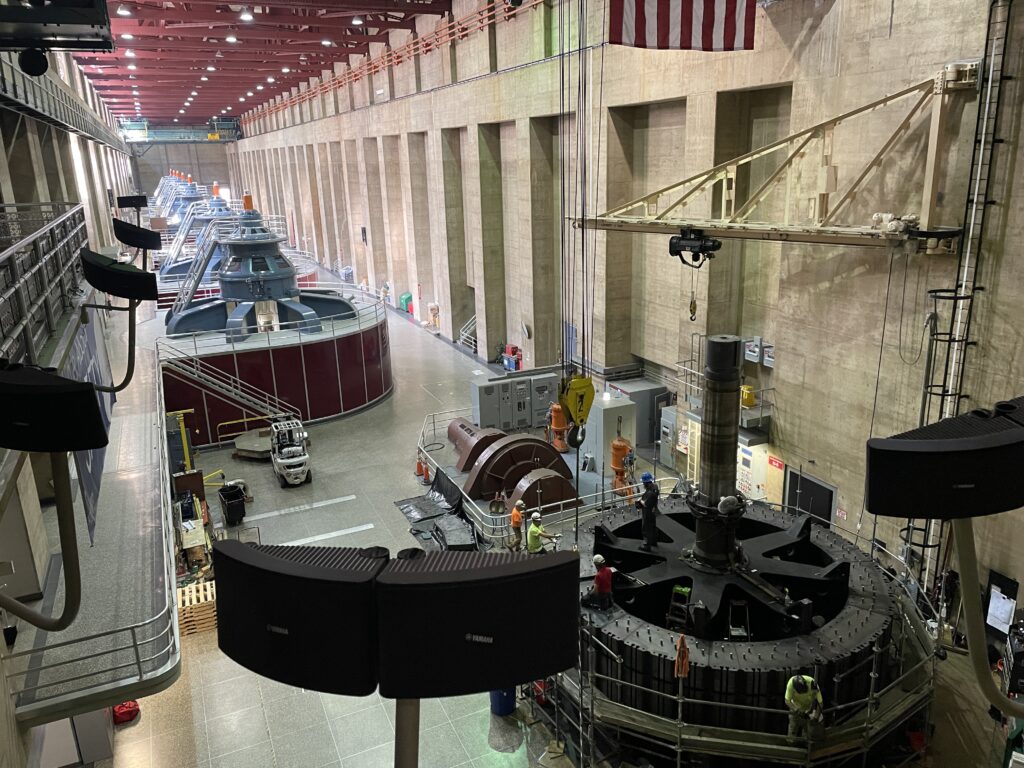
Now, if you only signed up for the Hoover Dam power plant tour, this is where you finish. Those of us on the full tour, however, continued onward into the bowels of the concrete monstrosity.
Next, we navigated through a small tunnel (pictured below) that ran horizontally along the length of the dam.

Within that hallway, we learned about this metal bar and two metal bolts in the wall that engineers use to measure any movement or shifting in the dam's concrete.

There were also markings on the walls that workers used to determine their own location within the tunnel and to communicate to others where issues may exist.

Branching off of the tunnel was one of the coolest parts of the tour, a ventilation tunnel that they allowed the tour group to walk down, which led to an opening on the dam's face.
As a 6' 4" tall guy, I had to crouch to get to the end, as the tunnel wasn't exactly "tall-guy-friendly".


The green arrow below points to the ventilation vent I'm peeking out of in the photos above.

Here's a view of the ventilation tunnel as I made my way back to the hallway and the rest of the tour group.

Next, we continued to follow the hallway and came across a Geiger counter, which senses any seismic activity at the site.

The final stop of the tour was one of the coolest visuals. The Hoover Dam has a flight of stairs that spans from the bottom to the top of the structure.
From our viewpoint, we were able to see the stairs both descend and climb into the darkness.
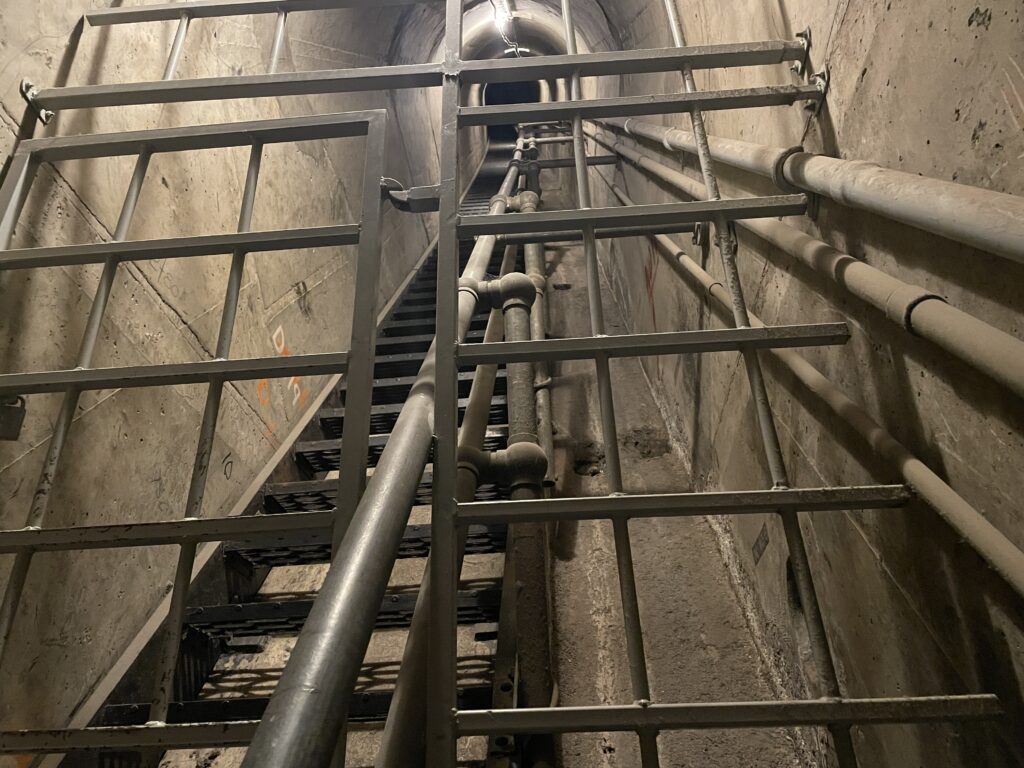

The tour concluded by releasing us outdoors to the top of the Hoover Dam via an elevator lobby decorated with green marble from Vermont.
An added bonus, the guides have fully embraced cheesy "dam" wordplay jokes like those leveraged in the movie "Vegas Vacation".
Exploring The Exterior
After the tour, I walked around and explored the exterior of the Hoover Dam. Here are a bunch of photos of the trouble I got into.


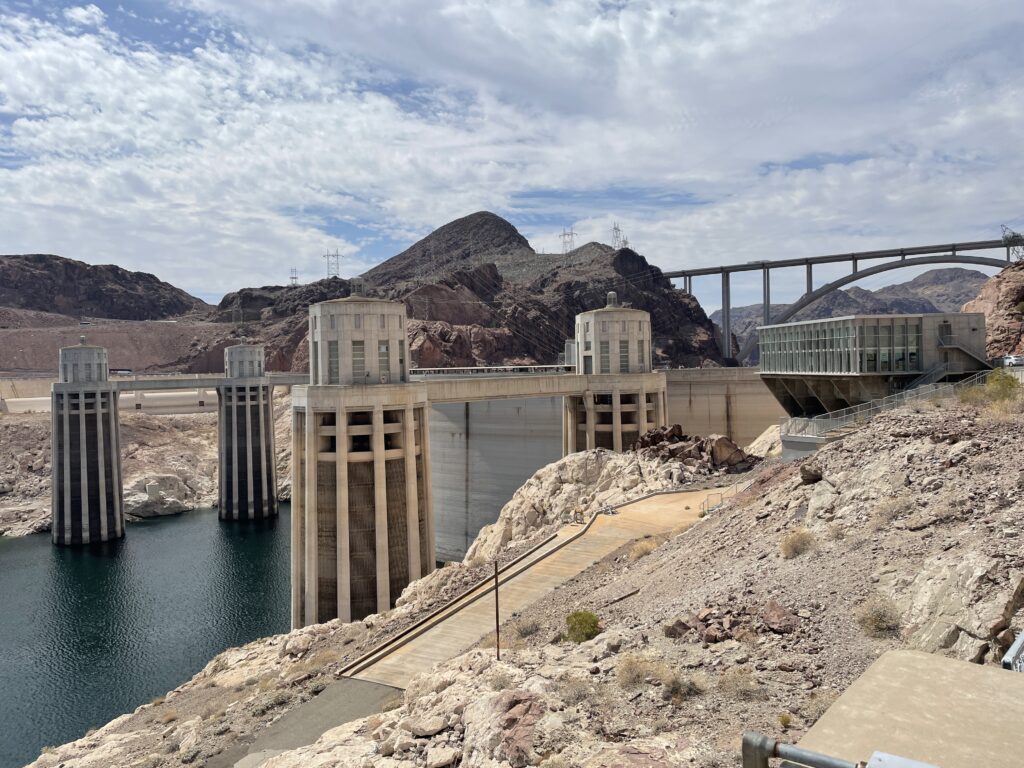


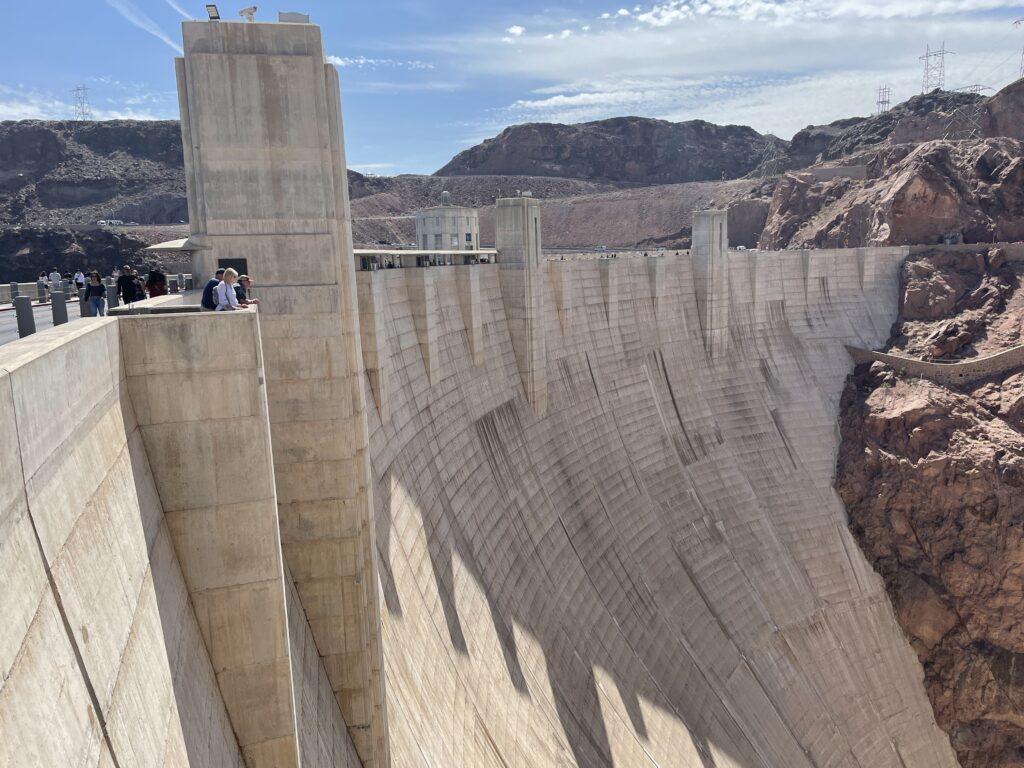
While I've been to Hoover Dam numerous times, I never noticed the restrooms in the towers above the dam (pictured above) that look authentic to the 1930s.
You enter the tower from the sidewalk atop the dam and enter a lobby with a modern vending machine.
To get to the restroom, just climb the flight of stairs. Pretty cool! And yes, I'm the kind of creep who photographs restrooms.


Mike O'Callaghan-Pat Tillman Bridge

Offering a pedestrian walkway, the Mike O'Callaghan-Pat Tillman Bridge is a can't-miss free attraction in and of itself.
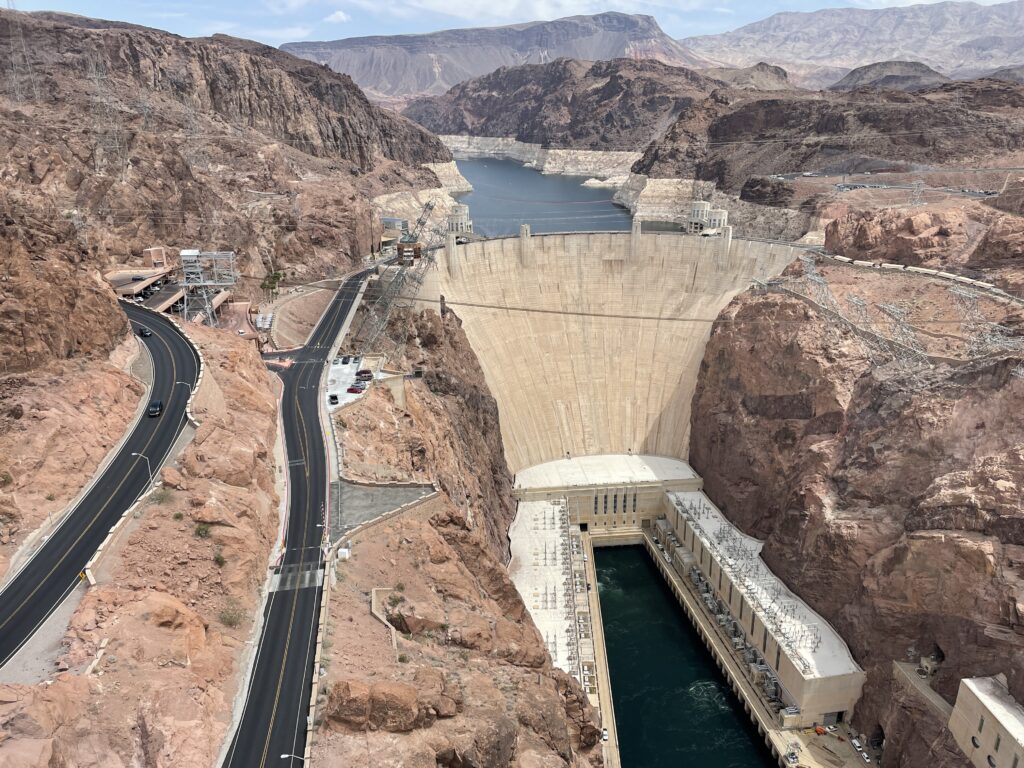
The bridge spans the canyon and provides the opportunity to photograph the Hoover Dam and Lake Mead behind it as if you were airborne.
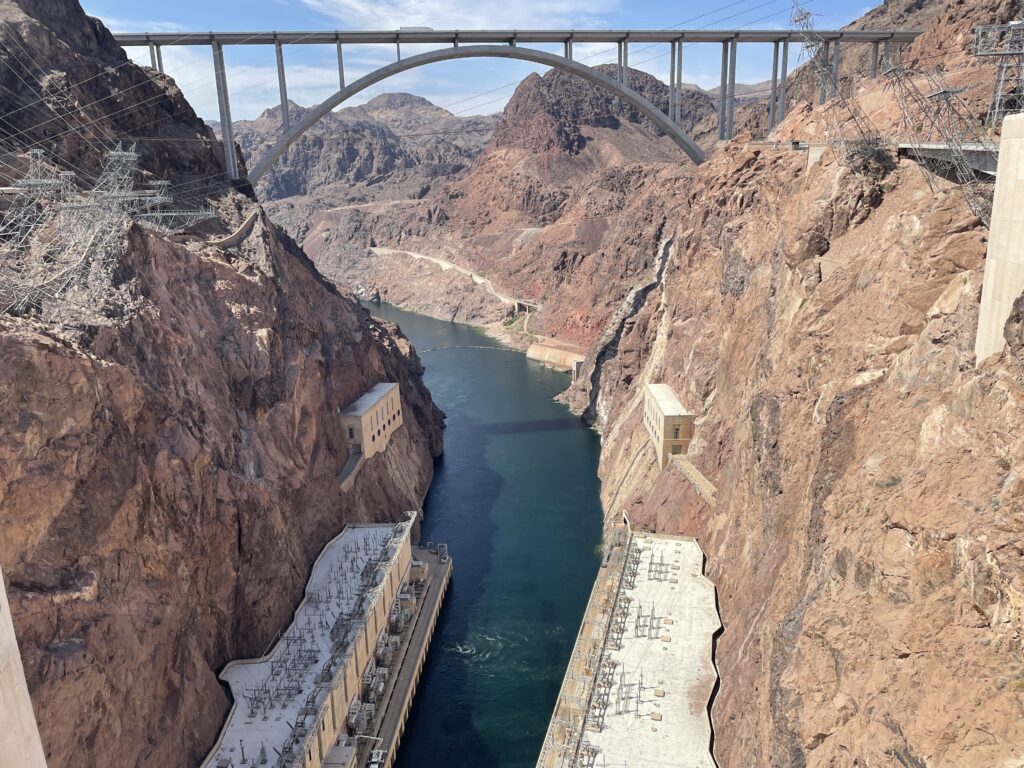
You'll run into the bridge's parking lot on both your way in and/or out of Hoover Dam, and from there, you'll climb the stairs to the bridge's scenic pedestrian walkway. There's also a ramp to the bridge, making it accessible to folks who utilize wheelchairs.

People with a "heights thing" may want to think twice, as the 1,900-foot-long bridge is perched nearly 900 feet above the river below. It's seriously harrowing.
Especially concerning for those anxious about heights is the way the bridge shakes/rattles when semi-trucks pass by. It just doesn't seem right that the structure can move that much.


Once you make it out to the middle of the bridge, you'll have one hell of a view.
If you're visiting in the heat of summer, tackle the bridge in the morning before the sun & heat ramp up.
Hoover Dam Worth a Trip?
Put this on your list. It's amazing, and you're crazy if you don't find it interesting.
The size and scale of the attraction, along with the natural beauty that surrounds it, are guaranteed to impress just about anyone.
While I'd argue Hoover Dam is worth a trip even if you're not planning to take a guided tour, seeing the innards of the dam and learning from the team of professional guides is more than worth the $40.
Related: Need additional ideas for outdoor activities in Las Vegas? Check out our day trips to:
- St. Thomas Ghost Town - Which was flooded by Lake Mead, and recently re-emerged!

I’m a former software salesman turned Vegas aficionado. While the craps table is my preferred habitat, I pull myself away to explore new attractions, shows, restaurants, and outdoor activities around Las Vegas with the intent of sharing my experiences.
Ultimately, I just want to help folks plan a better trip and save a few bucks in the process.


Thanks for this great piece. We are planning to visit the dam in July and had no idea about the tour. Will certainly try to take this now.
Thank, good stuff. Appreciated 👏